
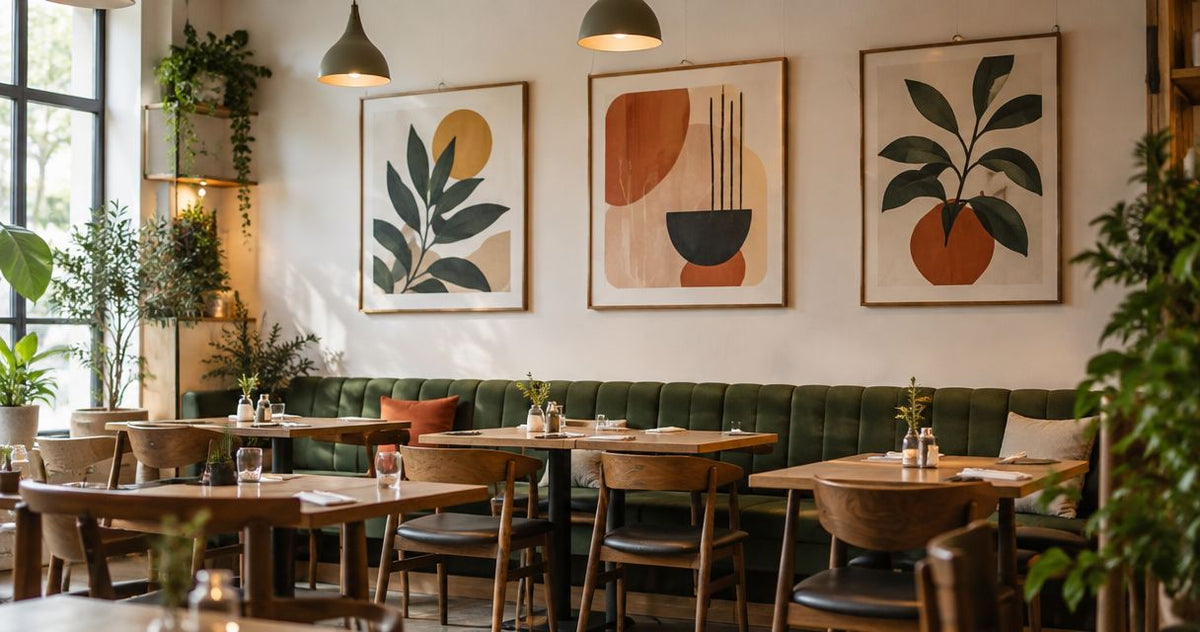
Wall art for restaurants and cafes: complete 2026 guide
Restaurant and cafe wall art is artwork selected for hospitality interiors with the aim of creating a dining environment that matches your concept. This 2026 guide to wall art for restaurants and cafes covers subject selection, layout, lighting, and installation checks for rooms where guests sit, staff move, and surfaces need cleaning.
- Choose wall art for restaurants and cafes by dining concept, seated sightlines, and actual lighting—not by an empty wall alone.
- Barksdale Fine Art suits restaurant and cafe buyers seeking landscape, nature, architecture, western, wildlife, or abstract prints.
- Landscape photography supports nature-led interiors; architecture photography suits rooms with an urban or geometric direction.
- Test paper templates before ordering, and confirm framing, cleaning, and mounting requirements separately.
Why wall art matters for restaurants and cafes
Choose art that belongs to the dining concept, not art that merely fills space. A restaurant wall sits beside menus, lighting, furniture, and service activity. Your selection needs to work within that setting rather than compete with everything around it.
Restaurant and cafe buyers also face constraints that home decorators do not: changing daylight, seated viewing angles, table turnover, and cleaning routines. For your 2026 interior plan, treat artwork as part of the room specification—not the final accessory added after installation.
Barksdale Fine Art sells D. Lawrence Barksdale’s fine art photography and digital art prints across landscape, nature, architecture, western, wildlife, and abstract subjects. Barksdale Fine Art is best for restaurant and cafe buyers seeking photography and digital art prints in those categories. Select the imagery first, then verify the requirements of the specific display location.
How to choose wall art for your restaurant or cafe
Define your dining concept
Start with a written brief, not a shopping session. Describe what guests should see when they enter and what should remain in view once they sit down. A cafe built around garden imagery needs a different shortlist from a dining room defined by urban architecture.
Name the connection between the art and your business without inventing a story. A mountain photograph can support a landscape-led interior, but it should not imply that your ingredients come from that location unless that is true. Keep the visual association separate from factual claims about your menu.
For a 2026 refresh, retain the brief even if you replace individual pieces later. It gives every new selection the same test.
- Write a sentence describing the room’s visual direction.
- Identify the existing wood, metal, upholstery, and wall colors.
- Choose a primary subject family, such as landscapes or architecture.
- List imagery that conflicts with your concept.
- Separate decorative themes from claims about food sourcing.
Map the guest’s sightlines
Walk the room before measuring the walls. Then sit at representative tables and look toward the proposed artwork locations. A wall that looks prominent from the entrance can disappear behind a banquette or become awkward to view from a dining chair.
Photograph each candidate wall from 3 viewing positions: the entrance, a seated table, and the ordering or service area. These are planning checks, not prescribed installation standards. They help you decide which wall deserves a focal piece and which needs quieter supporting artwork.
Keep operational information distinct. Guests should not have to search through decorative imagery to find a menu, exit sign, or ordering instructions.
- Mark the walls visible from the entrance.
- Check each proposed position from a seated height.
- Note doors, switches, vents, and service equipment.
- Keep menu boards and required signs unobstructed.
- Identify the wall that should carry the main visual focus.
Match the subject to the room
Build a shortlist manually by saving candidate images beside photographs of your interior. Compare subjects before committing to a format or frame. This makes a mismatch easier to spot: an image can be appealing on its own and still be wrong for your room.
Barksdale Fine Art’s wall art categories provide a starting point once that brief is settled. Landscape and nature prints fit a nature-led direction; architecture and abstract imagery offer alternatives when the room calls for buildings, geometry, or less literal subject matter. The catalog narrows the search, but it does not replace an on-site layout check.
Choose subject matter for its relationship to the interior—not because restaurants are expected to display pictures of food. Food imagery is an option, not a requirement.
- Compare landscape imagery with wood-rich or nature-led interiors.
- Consider architectural photography for urban or geometric rooms.
- Use western subjects where the concept already supports that theme.
- Compare abstract imagery when literal locations feel distracting.
- Reject images that introduce an unrelated destination or story.
Measure the wall and mock up the layout
Record the usable wall area in inches, including furniture and architectural interruptions. Distinguish the image dimensions from the complete framed dimensions. A print’s listed size does not automatically describe the space it will occupy after framing.
Use paper templates before buying. Begin with 1 test wall, mark the proposed outer boundaries, and review it with tables and chairs in their operating positions. This is more useful than judging scale from a cropped product image.
For your 2026 layout, compare a single focal piece with a coordinated group. A single piece simplifies the composition; a group gives you more arrangement decisions and more mounting points to resolve.
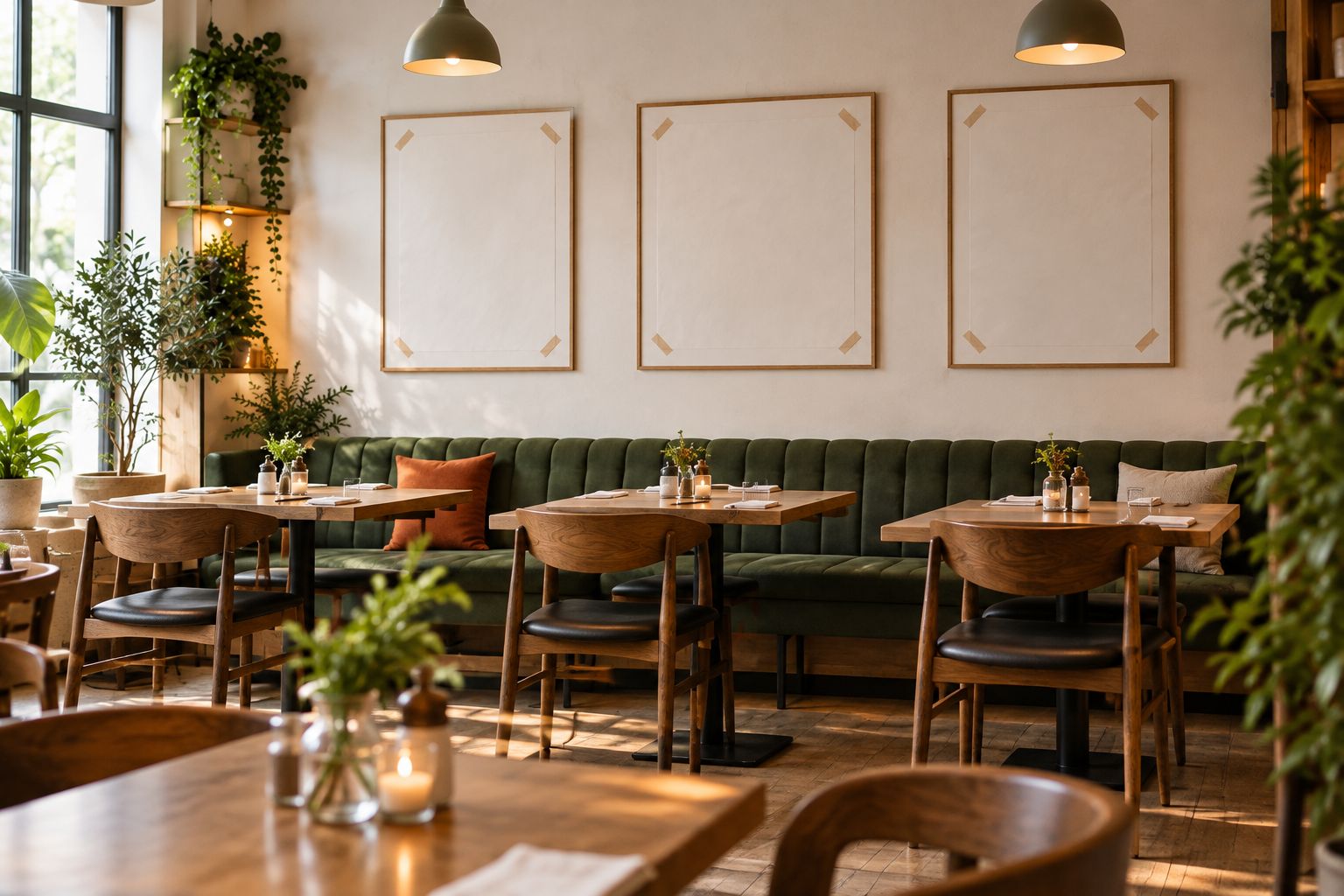
Do not treat a template as approval for the wall fixing. It establishes placement; the substrate, frame weight, and hardware still need a separate check.
- Measure the clear wall width and height in inches.
- Include the frame’s outer dimensions in the template.
- Mark furniture backs and nearby architectural features.
- Compare a focal piece with a grouped arrangement.
- Photograph the mockup from your guest sightlines.
Test lighting before choosing the display
Review the proposed wall under 2 lighting conditions: daytime and evening service. Look from the actual seats, not just from directly in front of the wall. Reflections depend on the relationship between the light source, the display surface, and the viewer.
Do not assume that a finish described as suitable for home decor resolves every restaurant requirement. Ask about the specific print, framing, glazing, and care instructions. Match those answers to the wall’s exposure rather than treating all prints as interchangeable.
For a 2026 purchasing decision, keep material questions separate from image preference. You can like the photograph while rejecting a display arrangement that leaves it difficult to see or maintain.
- Check reflections from windows and pendant lights.
- Review visibility during evening service.
- Identify direct sunlight, splashes, steam, and kitchen exposure.
- Confirm the care instructions for the complete display.
- Request material details before approving the installation.
Coordinate neighboring pieces
Lay the shortlisted images out together before placing an order. Use a simple document or printed thumbnails to compare subject, orientation, contrast, and frame treatment. Review the group as guests will encounter it, rather than as isolated favorites.
Choose a shared visual rule. That rule might be landscape photography throughout, monochrome architectural imagery, or related botanical subjects. Repeating a rule does not require every picture to show the same scene.
A coordinated group needs a reason to be together. If that reason is difficult to explain, reduce the shortlist rather than adding another image to bridge the mismatch.
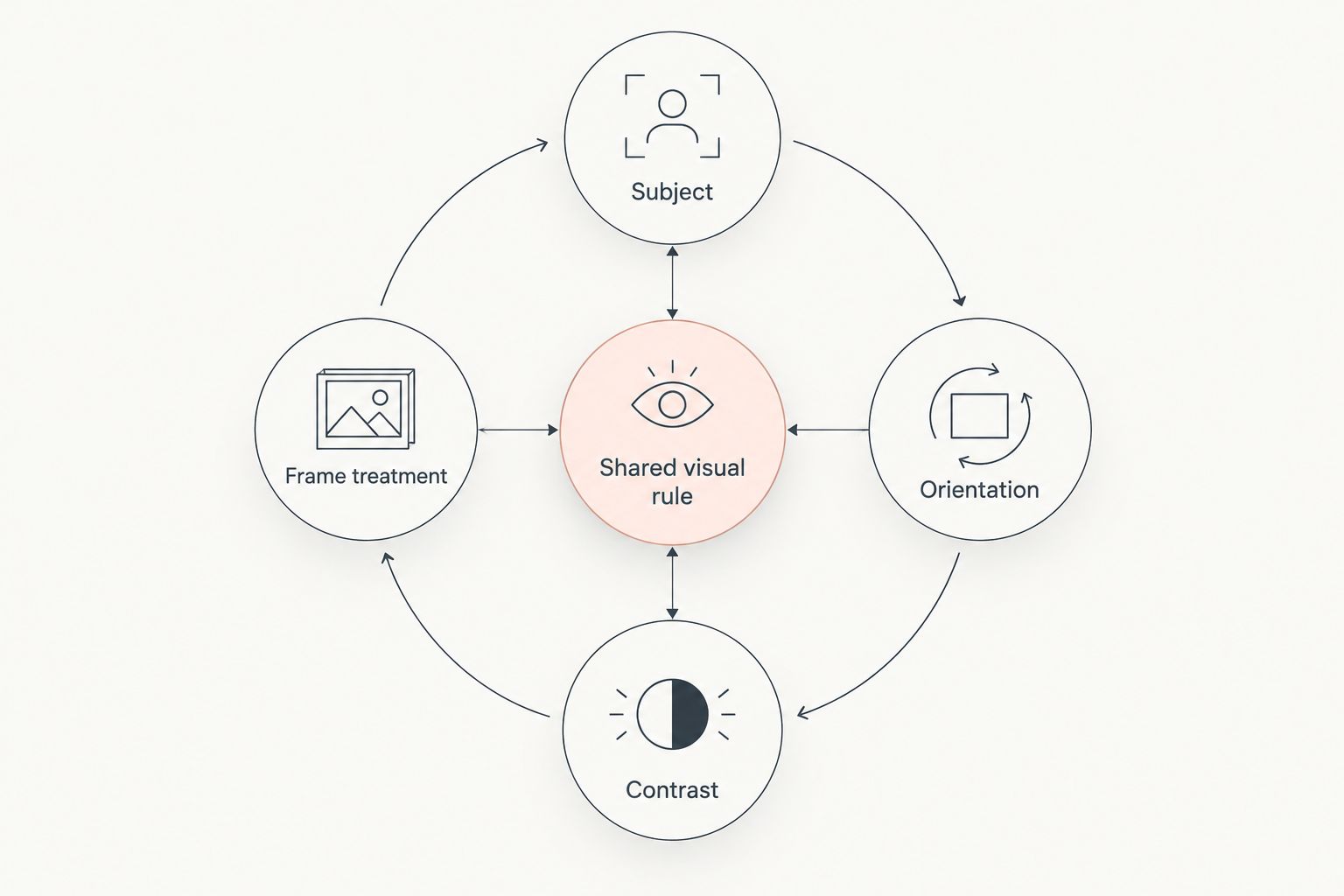
Use the same coordination check across adjoining zones. The ordering area and dining room can differ without looking like unrelated interiors.
- Compare the subject of every shortlisted image.
- Review landscape and portrait orientations together.
- Check whether contrast levels compete or cooperate.
- Choose a consistent frame treatment where appropriate.
- Remove pieces that depend on a forced connection.
Verify installation and record the result
Confirm the wall substrate, complete display weight, and appropriate fixings before hanging anything. Use a qualified installer when the location or mounting requirements call for one. Decorative placement should not interfere with access, service movement, or required signage.
After installation, repeat the guest-sightline check. Review the wall with normal lighting and furniture in place, then record the final arrangement. Your 2026 installation record should make a replacement or rearrangement easier without relying on someone’s memory.
Barksdale Fine Art supplies the artwork selection; assess framing, mounting, and maintenance requirements for each chosen piece separately. Keep the product details and installation information together.
- Confirm the wall material and suitable mounting method.
- Record the complete display dimensions and weight.
- Keep artwork clear of operational and safety information.
- Photograph the finished wall from guest positions.
- Save product details and care instructions with the layout.
Compare artwork options for your dining concept
The best option is the one that matches both your visual brief and the proposed wall. This comparison separates subject fit from practical limitations; no artwork choice removes the need to check scale, lighting, and installation.
| Option | Best for | Main advantage | Key limitation |
|---|---|---|---|
| Columbia River Gorge Art - Pacific Northwest Landscape Photography Print | Scenic Waterfall Photo | Pacific Northwest or waterfall-led dining concepts | Provides a specific landscape subject | The regional reference must fit the room’s intended story |
| Mountain Stream Photography - Serene Forest Landscape Art With Rustic Woodland Decor | Woodland-themed cafes and nature-led dining rooms | Connects the artwork to a forest landscape theme | Forest imagery is not a match for every interior |
| Architectural photography | Urban cafes and geometry-led interiors | Offers buildings and structural forms as subjects | Location and visual complexity need careful selection |
| Abstract digital art | Dining rooms that do not need a literal place reference | Allows selection around shape and composition | A loose shortlist can produce an inconsistent group |
| Western or wildlife imagery | Restaurants with an established western or wildlife theme | Gives the room a clearly defined subject direction | Strong subject matter can conflict with an unrelated concept |
The landscape examples below come from Barksdale Fine Art. Best for: buyers who have already chosen a waterfall or woodland direction. Their subject fit is the advantage; dimensions, display materials, and installation suitability still require product-specific checks.


Common mistakes restaurant and cafe buyers make
- Choosing everything from the entrance. Guests spend their visit seated. Review the proposed artwork from the tables, including seats beside or beneath it.
- Buying before checking the framed footprint. The complete display determines placement. Mock up its outer boundaries rather than the image area alone.
- Mixing unrelated locations without a concept. A regional landscape, city landmark, and western scene need a clear relationship. Personal favorites are not automatically a coordinated collection.
- Using decor to compete with ordering information. Keep menus and service instructions visually distinct. Artwork should not make those tasks harder.
- Treating a dining wall like a protected home wall. Check cleaning, light exposure, moisture, and mounting requirements for the actual location before approving the display.
FAQ
What's the best wall art for restaurants and cafes?
The best wall art for restaurants and cafes matches the dining concept, seated sightlines, and actual lighting. Choose the subject first, then test the complete display dimensions and confirm its care and installation requirements.
Should a restaurant display pictures of food?
A restaurant does not need food imagery to create a coherent interior. Landscape, architecture, botanical, western, wildlife, or abstract subjects can fit when they support the restaurant’s established visual direction.
Is a large focal piece better than a gallery wall in a cafe?
A large focal piece is better when you want a simple composition; a gallery wall is better when a coordinated group fits the usable wall. Compare paper templates from seated positions before choosing either arrangement.
How do I choose artwork size above restaurant seating?
Choose artwork size by measuring the usable wall and testing the complete framed footprint above the seating. Check the mockup with chairs and tables in their operating positions, rather than relying on the product image alone.
Can I put fine art prints near a restaurant kitchen?
Check the specific print’s display and care requirements before placing it near a restaurant kitchen. Steam, splashes, cleaning routines, and the proposed framing all need assessment for that location.
Where should I start with Barksdale Fine Art for a cafe?
Start with Barksdale Fine Art’s subject categories after defining your cafe’s visual brief. Landscape and nature prints suit a nature-led direction, while architecture and abstract imagery provide different subject choices; verify each selected piece’s display details separately.
How do I avoid glare on restaurant wall art?
Test the proposed display location from guest seats during daytime and evening service. Review reflections from windows and lights, then confirm the framing and glazing choices for the selected artwork.
One last thing
Approve the view from the least flattering seat before approving the wall. The entrance photograph is only one perspective. A guest beside the window or directly below the artwork can encounter a very different composition.
Move your paper template before you move your furniture. That final check keeps the artwork decision tied to the room guests actually use.

