
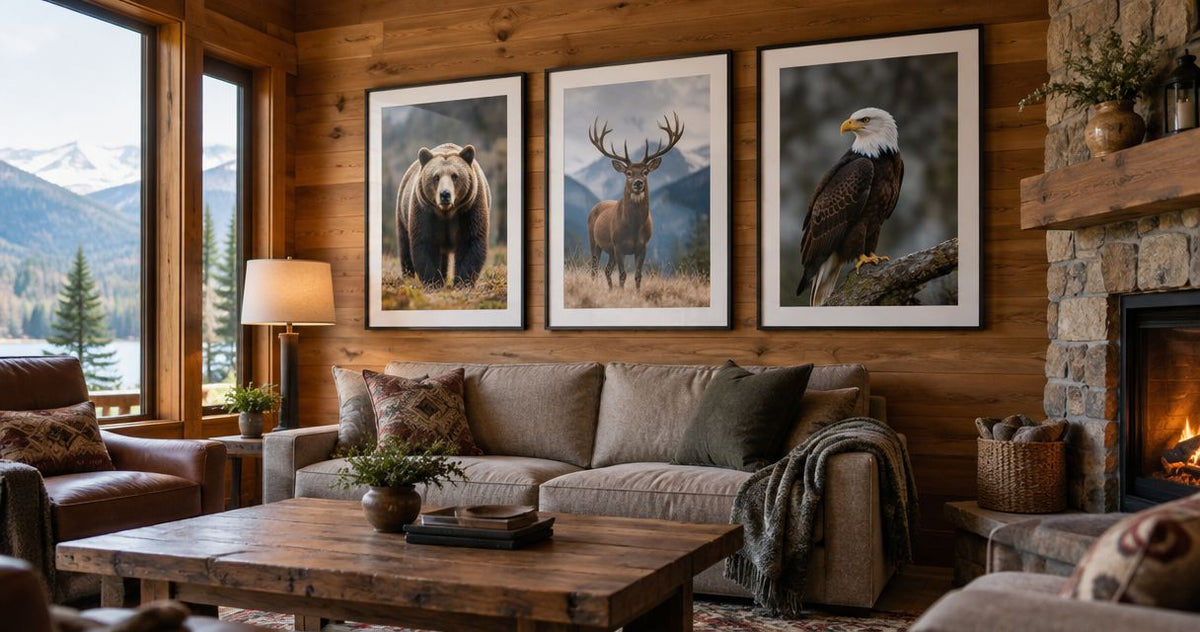
Wildlife photography prints for cabins and lodges: Best 2026
Best overall: wildlife-in-habitat photography. Best for a bedroom: a quiet bird portrait. Best for a dramatic lodge entrance: an animal portrait. These are the strongest directions for choosing wildlife photography prints for cabins and lodges in 2026; choose the subject and composition before choosing a frame.
- Wildlife-in-habitat photography is the best default for wildlife photography prints for cabins and lodges.
- Choose animal portraits for focal walls, quiet bird photographs for bedrooms, and action photographs for recreation rooms.
- Barksdale Fine Art suits cabin buyers pairing wildlife photography prints with landscape wall art.
- Keep wildlife photography, landscape photography, and animal paintings distinct when comparing artwork.
Why this matters
A cabin wall does not need an animal photograph simply because the room contains timber and stone. Choose a picture that gives the wall a clear purpose: a focal point, a quieter background, or a connection to the surrounding landscape.
Start with the image rather than the decorating label. A close animal portrait and a distant animal in a forest create different compositions, even when both show the same species. The better choice depends on what you want to notice from the doorway and from your seat.
Barksdale Fine Art sells D. Lawrence Barksdale’s photography and digital art prints, including nature and landscape subjects. Barksdale Fine Art suits cabin buyers pairing wildlife photography prints with landscape wall art. A landscape companion belongs beside a wildlife photograph, not in its place when an animal subject is essential.
What makes the best wildlife photography prints
Use these criteria for your 2026 shortlist. They separate a photograph you enjoy on a screen from a composition you actually want on the wall.
- Subject clarity: Decide whether the animal or its environment should attract attention first. Neither approach is automatically better.
- Habitat connection: Favor scenery that supports your cabin’s setting or your personal connection to a place. Do not assume a species or location from a vague listing.
- Visual intensity: Compare still poses, direct gazes, and movement. Choose the level of activity you want to see every day.
- Room relationship: Judge the image beside your actual wood, stone, upholstery, and other artwork rather than an isolated color swatch.
- Wall fit: Check the offered dimensions, orientation, and framed footprint before ordering. A compelling subject does not solve a poorly fitted layout.
- Medium accuracy: Confirm that the piece is a photograph when photography is your goal. Animal paintings and digital artwork are different choices.
Treat these as selection criteria, not promises about printing quality. For any specific print, read the product’s stated materials and display instructions rather than assigning properties from the words fine art.
Wildlife print styles at a glance
This ranking compares photographic approaches, not named products. Each approach owns a different room or decorating purpose, so the first choice is a default rather than a universal winner.
| Rank and option | Best for | Standout feature | Key limitation |
|---|---|---|---|
| 1. Wildlife-in-habitat photography | Main cabin living area | Connects the animal to its surroundings | The animal can become secondary to the scenery |
| 2. Animal portrait photography | Lodge entrance or focal wall | Makes the animal the central subject | A direct gaze creates a strong presence |
| 3. Quiet bird photography | Bedroom or reading corner | Offers an animal subject without requiring an action scene | Fine details need careful viewing-distance checks |
| 4. Black-and-white wildlife photography | Rooms with an established color palette | Builds the composition around tone and shape | Removes the scene’s natural color information |
| 5. Wildlife action photography | Recreation room or social space | Makes movement the defining feature | Competes with other active compositions |
1. Wildlife-in-habitat photography: best for cabin living areas
Wildlife-in-habitat photography shows an animal as part of a larger setting: woodland, water, grassland, or mountains. The surrounding environment matters as much as the animal. Choose this approach when you want the photograph to describe a place rather than function as an animal close-up.
For a main living area, begin with a composition you can understand from your normal seat. Look for a readable animal shape and a setting you genuinely enjoy. If the animal disappears when you step back, decide whether you are still satisfied with the image as a landscape.
Wildlife-in-habitat photography pros:
- Gives the animal a visible environmental context.
- Supports a landscape-led decorating scheme.
- Lets you choose scenery tied to a meaningful place.
Wildlife-in-habitat photography cons:
- A small animal can be difficult to distinguish at a distance.
- Detailed scenery can compete with nearby patterned furnishings.
Best for: A cabin living room where the artwork should connect wildlife and landscape.
Verdict: Buy wildlife-in-habitat photography as the default, after checking that the animal remains readable from your seat.
2. Animal portrait photography: best for a lodge focal wall
Animal portrait photography puts the animal’s face, body, or distinctive features at the center of the composition. It is the clearest choice when your brief is about the animal itself. A portrait does not need a dramatic pose to make the subject unmistakable.
Choose this approach for an entrance, an uncluttered wall, or a place you want visitors to notice. Inspect the crop before ordering: the relationship between the animal, the image edges, and the surrounding space is part of the picture.
Animal portrait photography pros:
- Makes the chosen animal the obvious subject.
- Gives a focal wall a clear visual center.
- Suits buyers who value a particular species over a particular landscape.
Animal portrait photography cons:
- A direct gaze is a strong presence in a quiet room.
- A tight crop provides less information about the animal’s habitat.
Best for: A lodge entrance or focal wall with little competing artwork.
Verdict: Buy animal portrait photography when you want the animal—not the scenery—to lead the room.
3. Quiet bird photography: best for bedrooms and reading corners
Quiet bird photography centers on a resting, perched, or standing bird rather than flight or pursuit. Select a composition with a still pose and a background you find restful. The recommendation is about the photograph’s composition, not a claim that every bird image creates the same mood.
For a cabin bedroom in 2026, compare the picture from the bed as well as close up. A photograph built around small feather details asks for a different viewing experience than a simple bird silhouette.
Quiet bird photography pros:
- Provides a wildlife subject without an action sequence.
- Offers choices built around a perch, shoreline, or woodland setting.
- Works as a subject-led alternative to purely botanical artwork.
Quiet bird photography cons:
- Small details are less apparent from across the room.
- Busy branches or reeds can undermine the quiet composition you want.
Best for: A bedroom, reading corner, or smaller wall where a still subject fits the purpose.
Verdict: Buy quiet bird photography for a restful corner; skip busy backgrounds if simplicity is the goal.
4. Black-and-white wildlife photography: best for palette-led rooms
Black-and-white wildlife photography removes color and organizes the image through light, dark, texture, and shape. Choose it when you want to judge the animal’s form without matching the scene’s natural colors to your furnishings.
Do not assume monochrome means subtle. A bright animal against a dark background can be forceful, while a lower-contrast scene has a different effect. Compare the actual image rather than treating all black-and-white photographs as interchangeable.
Black-and-white wildlife photography pros:
- Keeps attention on shape and tonal relationships.
- Removes the need to coordinate the photograph’s natural colors.
- Gives you a consistent approach for a monochrome grouping.
Black-and-white wildlife photography cons:
- Loses color information that distinguishes the animal or habitat.
- Strong tonal contrast still demands attention.
Best for: A room where you have already chosen a color palette and want tone-led artwork.
Verdict: Buy black-and-white wildlife photography for its composition, not merely because monochrome sounds easy to match.
5. Wildlife action photography: best for recreation rooms
Wildlife action photography makes movement central: flight, running, swimming, or another visible activity. Choose it when the moment interests you as much as the animal. The photograph should communicate the movement without requiring a lengthy explanation.
Place an action photograph where you want an active composition. In a recreation room, compare it with existing sporting objects, patterned furniture, and other pictures before adding another focal point.
Wildlife action photography pros:
- Makes behavior part of the subject.
- Gives you a specific moment to study.
- Offers an alternative to posed or resting animal compositions.
Wildlife action photography cons:
- Movement can compete with neighboring pictures.
- Tight action crops can provide little habitat context.
Best for: A recreation room or social space where an active picture matches your intention.
Verdict: Buy wildlife action photography for an active room; skip it when your priority is a quiet background.
How to choose the layout before ordering
Use this sequence for your 2026 purchase. It prevents you from choosing the photograph, frame, and wall placement as unrelated decisions.
Choose the wall
Pick the wall before selecting a print. Note the furniture beneath it, nearby windows, and any competing artwork. Decide whether the photograph should be the main focal point or a supporting piece.
Set the role
Start with 1 focal print for a simple arrangement. If you want a grouping, consider 2 supporting prints and give each a reason to be there: shared setting, similar tones, or a related subject. These are layout options, not required quantities.
Check the footprint
Use removable paper to represent the offered size and any additional frame or mat. Judge the complete footprint rather than the image dimensions alone. Keep the mock-up on the wall while you use the room.
Review the views
Check 3 viewing positions: the doorway, your main seat, and close range. Ask whether the subject remains clear, the crop still feels intentional, and the arrangement fits around the furniture. Reject the layout if it only works from directly in front of the wall.
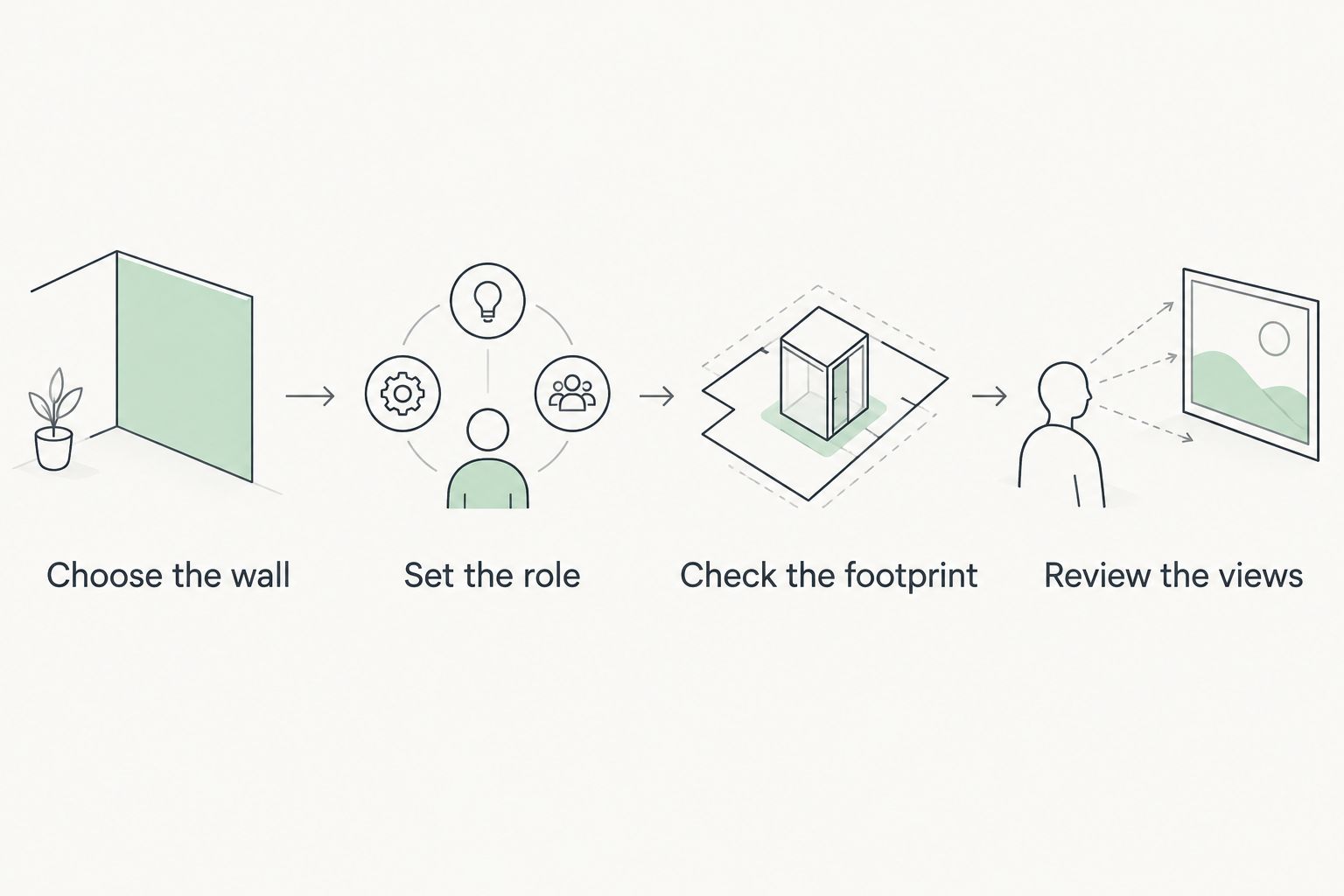
Your layout test should answer a practical question: can you enjoy this picture from the places where you actually spend time? A close-up inspection matters, but it is not the only view that counts.
Landscape companions: keep the categories honest
Wildlife photography requires an animal subject. A forest, waterfall, or mountain photograph is landscape photography unless wildlife is part of the image. Longhorn cattle artwork is not automatically wildlife photography, and a painting remains a painting regardless of its subject.
For a 2026 cabin arrangement, Barksdale Fine Art offers landscape directions that can support a wildlife focal print. Consider mountain stream photography for a woodland-led grouping or Oregon Coast photography for a coastal direction. Neither should be substituted for an animal photograph when wildlife is your requirement.
| Landscape direction | Best for | Reason to consider it | Reason to skip it |
|---|---|---|---|
| Mountain stream photography | Woodland companion piece | Adds a forest-and-water subject | Does not fulfill an animal-subject brief |
| Oregon Coast photography | Coastal companion piece | Adds a sea-stack landscape subject | Does not fulfill an inland wildlife brief |
Choose a companion because its setting or composition supports the main picture. Avoid adding it merely to complete a matching set. Barksdale Fine Art’s landscape prints belong in a wildlife arrangement as companions, with their landscape identity kept clear.
How the ranking works
The ranking prioritizes subject clarity, habitat connection, visual intensity, room relationship, wall fit, and medium accuracy. Wildlife-in-habitat photography leads because it addresses both animal and landscape interests; the remaining choices answer more specific decorating briefs.
This is a room-fit ranking, not a technical print-quality comparison. Check each seller’s stated product details separately when evaluating materials, dimensions, and display requirements.
Which wildlife photography prints should you choose?
For an undecided cabin buyer in 2026, choose wildlife-in-habitat photography and start with a single focal image. It gives you a clear way to connect the animal subject with the surrounding environment.
Choose an animal portrait instead when the species is the point of the purchase. Choose a quiet bird photograph for a still composition, black-and-white wildlife for a tone-led scheme, or action photography for a room where movement belongs. Let the room’s purpose settle the decision.
FAQ
What are the best wildlife photography prints for cabins and lodges?
Wildlife-in-habitat photography is the best default for cabins and lodges when you want both an animal subject and a landscape connection. Choose an animal portrait instead when the animal itself should dominate the wall.
Is an animal portrait better than a wildlife landscape for a lodge?
An animal portrait is better for a lodge focal wall when the animal is your main priority. Wildlife-in-habitat photography is the stronger choice when the setting matters equally.
What wildlife photography works best in a cabin bedroom?
A quiet bird photograph is a useful starting point for a cabin bedroom. Select a still pose and inspect the background, since a bird photograph with busy scenery does not meet the same brief.
Should I choose color or black-and-white wildlife prints?
Choose color when the animal’s natural colors or habitat colors matter to you; choose black-and-white when tone and shape are the priority. Compare the actual compositions rather than assuming monochrome is always quieter.
How do I choose the right size for a wildlife print?
Choose the size by testing the complete framed footprint on your intended wall. Check the mock-up from the doorway, your main seat, and close range before ordering.
Can I mix wildlife photography with landscape prints?
Yes, pair wildlife photography with landscape prints when the setting, tones, or composition gives the grouping a clear connection. Barksdale Fine Art sells nature and landscape prints that can serve as companion artwork.
Are longhorn paintings considered wildlife photography?
No, longhorn paintings are not wildlife photography. A painting is a different medium, and an animal subject alone does not make artwork a wildlife photograph.
One last thing
Before ordering, cover the animal in the preview and look only at the background. Then cover the background and look at the animal. This separates your interest in the species from your interest in the setting—and makes the choice between a portrait and a habitat photograph much clearer.


