
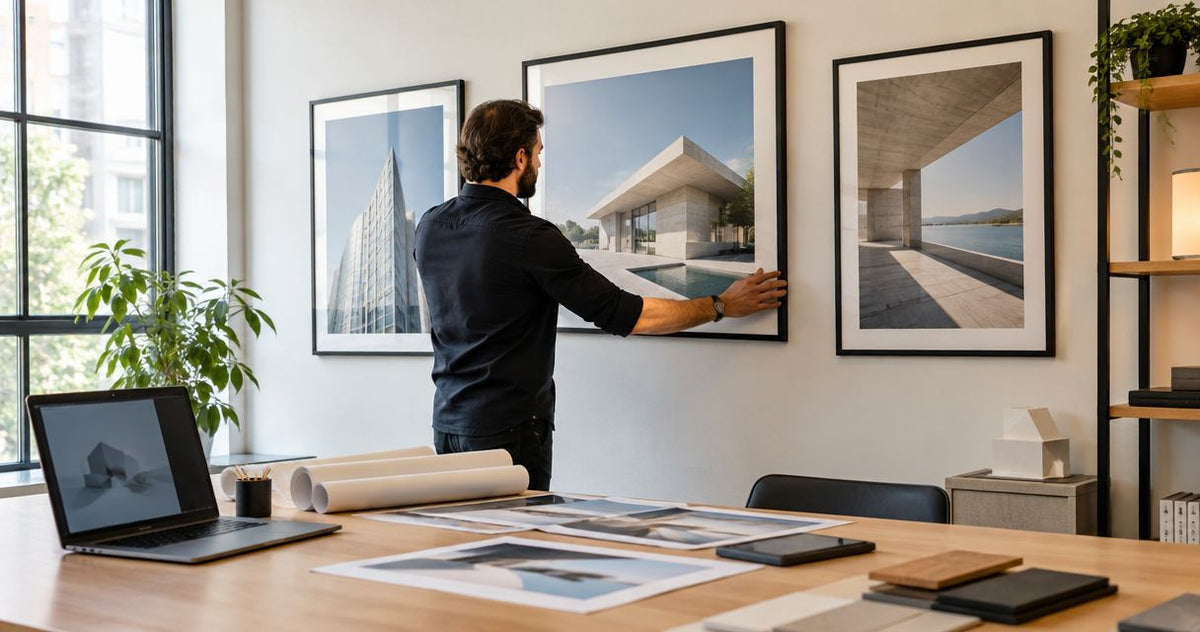
Architecture photography prints for architects and builders: complete 2026 guide
Architects and builders' architecture prints are photographic or digital depictions of buildings, spaces, and structural details selected to support a design-focused home or office. This 2026 guide explains how to choose architecture prints for architects and builders without confusing decorative artwork with project documentation or letting the image compete with drawings, samples, and models.
- Barksdale Fine Art suits architects and builders seeking architecture photography and digital art prints for office decor.
- Choose architecture prints for architects and builders by room purpose, subject, viewing distance, and wall proportions.
- Use architectural wall art as decoration; keep project photography separate when demonstrating your firm's work.
- Compare staircase details, cityscapes, and urban abstracts against the room's materials before selecting a print.
Why architecture prints matter for architects and builders
An architecture practice or building company needs artwork that belongs beside its working materials. A staircase photograph can support a discussion about circulation; a cityscape can introduce urban scale. Neither should be presented as evidence of your own completed work.
Select the image for the conversation you want the room to support. Reception, a materials library, and a private office have different jobs. Treating them as interchangeable leads to art that fits the wall but misses the setting.
For residential settings, the architecture photography prints for modern homes guide provides a separate starting point. In a professional space, begin instead with the relationship between the artwork, your project presentations, and the people using the room.
Your 2026 selection brief should distinguish three roles: decoration, architectural reference, and portfolio evidence. One image does not need to perform all three. Decide which role matters before considering individual prints.
Choose architecture prints in six steps
Start with a free room survey, not a purchase. Establish the room's purpose, inspect its existing materials, shortlist subjects, test placement, confirm the presentation details, and record the final decision.
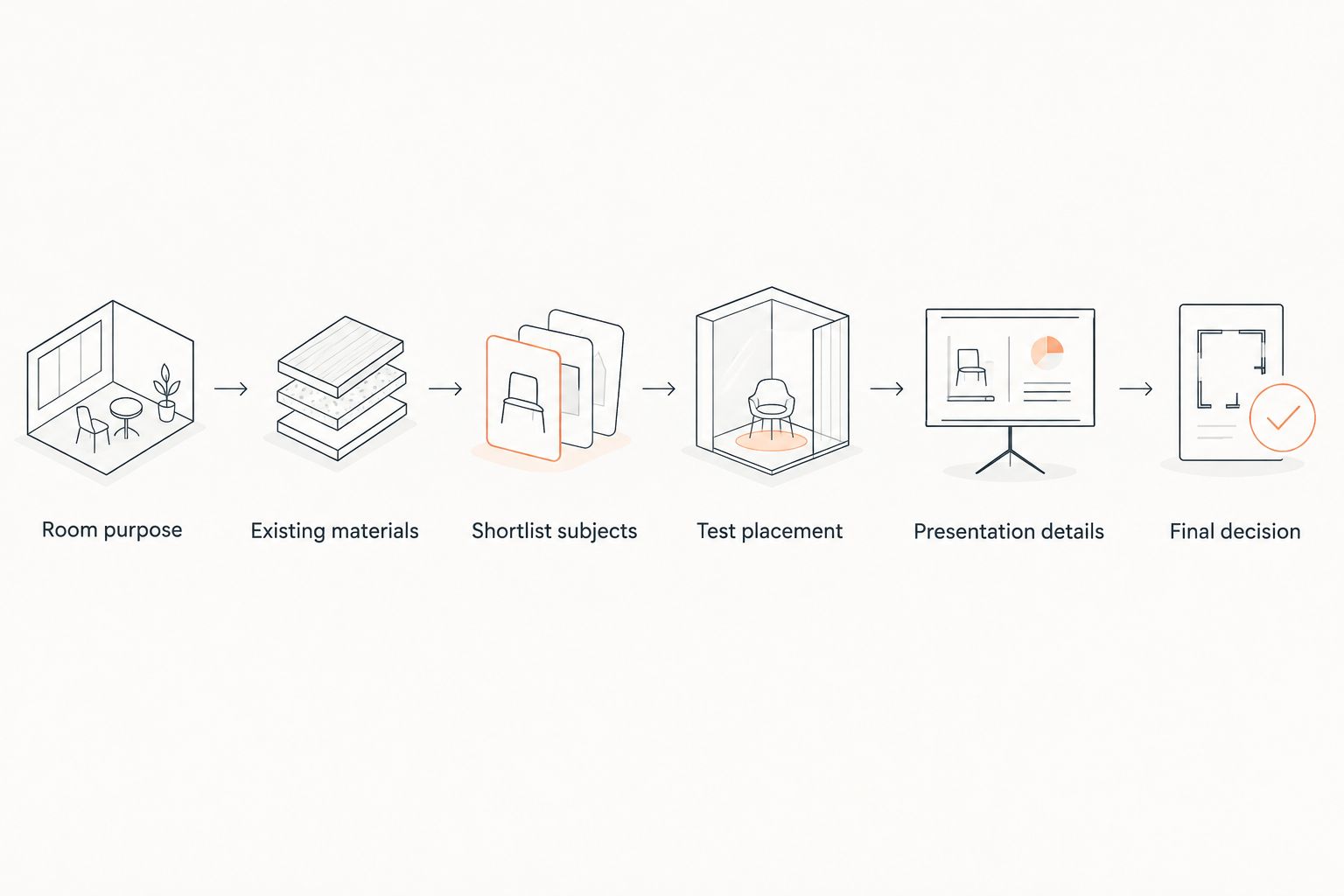
Define the room's purpose
Walk through the room and write a one-sentence brief using paper or a basic notes app. State who uses the space and what the artwork should contribute. For example, a reception brief can call for a clear architectural subject, while a drawing-review room can prioritize visual restraint.
Architects should account for drawings and models already on display. Builders should distinguish a client-facing selection room from an operational office crowded with schedules, notices, and project photographs. Decorative art needs an intentional location in either setting.
Choose 1 priority wall for the first selection rather than treating the whole office as a single decorating task. That keeps the decision tied to a real sightline and avoids ordering a series before testing its visual fit.
- Write the room's primary purpose in one sentence.
- Identify whether visitors view the wall seated or standing.
- Mark drawings, certificates, models, and signage that must remain visible.
- Decide whether the artwork should introduce place, structure, or material.
- Separate decorative artwork from your portfolio display.
Audit the materials and light
Photograph the wall during the working day and compare the photograph with what you see in person. A phone image is useful for arrangement, but it is not a reliable substitute for checking actual colors, reflections, and contrast.
Record 3 wall measurements: usable width, usable height, and the clearance above nearby furniture. These are your own site measurements, not assumed print dimensions. Include switches, thermostats, shelving, and door swings in the usable-area calculation.
For a 2026 office refresh, work from materials that are already installed or approved. A print selected against a temporary sample board needs another check once the finishes are in place. Monochrome is a useful comparison option, not an automatic solution for every material palette.
- Photograph the wall with nearby furniture in view.
- Record the usable width, height, and furniture clearance.
- Compare the image with actual wood, stone, metal, and textile samples.
- Inspect reflections from the room's normal viewing positions.
- Note strong existing patterns that the artwork must sit beside.
Shortlist subjects that support the room
Build a simple contact sheet of candidate images using your own authorized project photographs or images viewed on product pages. Group them by subject before judging them by preference: structural detail, complete building, cityscape, or architectural abstraction.
Barksdale Fine Art's architecture prints offer a ready-made alternative to preparing your own project imagery for display. The store sells D. Lawrence Barksdale's fine art photography and digital art prints for home and office decor. That makes the catalog relevant to decorative selection, not a substitute for your firm's portfolio.
Match the subject to the brief, not just to your profession. A staircase detail can suit a room concerned with craft and circulation. A cityscape can suit an urban-project setting. An abstract can keep the emphasis on form rather than a recognizable location; its limitation is reduced literal building context.
- Group candidates into detail, building, cityscape, and abstract subjects.
- Shortlist 3 candidate images for the priority wall.
- Write one reason each candidate belongs in that room.
- Reject images that duplicate an already dominant wall display.
- Check whether the depicted place carries an appropriate association.
Test placement before choosing a format
Use removable paper templates to test the outer dimensions you are considering, including any proposed frame. Use the actual dimensions supplied for the selected configuration; do not infer dimensions from a product photograph.
Inspect the wall from 2 viewing positions: the main entrance and the seat or workstation where someone spends time. A composition that reads well on arrival can become distracting directly behind a presentation surface. Conversely, a detail-rich photograph deserves a position where someone can inspect it.
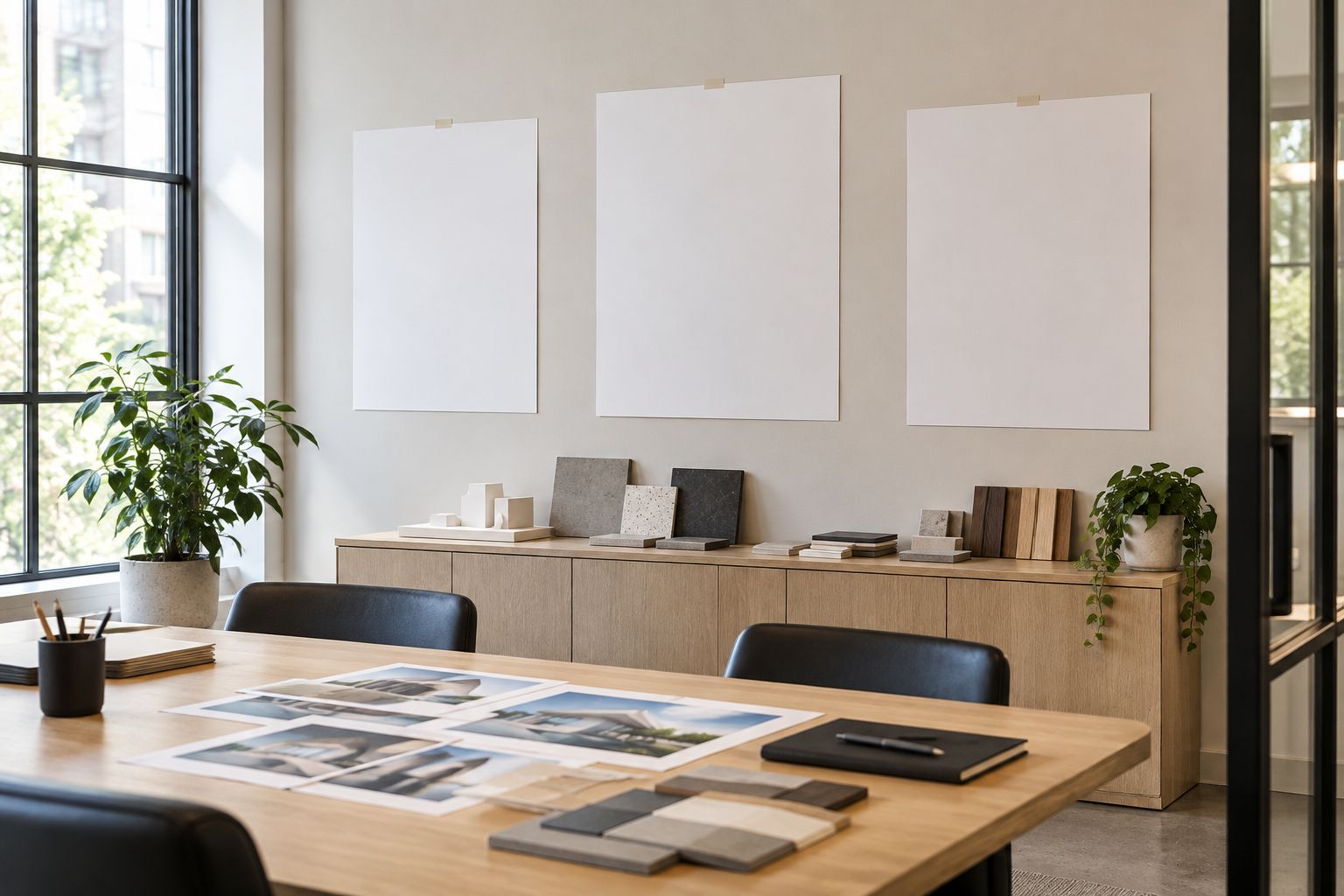
The template test checks scale and placement, not the finished image's color. Keep those decisions separate. If you are considering a group, test the whole arrangement rather than evaluating each rectangle alone.
- Mark the proposed outer footprint with removable templates.
- Check the arrangement from the entrance and principal seat.
- Keep door movement and controls clear.
- Test a grouped arrangement as a complete composition.
- Remove competing temporary displays before evaluating the result.
Confirm the presentation details
Write a short specification sheet yourself before placing an order. Record the exact artwork, selected configuration, proposed frame, intended location, and installation requirements. This prevents an attractive image from becoming an unresolved finishing task.
For your 2026 specification, verify the details shown for the individual product and configuration. Do not assume that every architecture print uses the same material, includes a frame, or arrives with identical mounting provisions. A title describes the artwork's subject, not its full physical specification.
Separate product selection from installation approval. The artwork, frame, wall substrate, and fixing method need to work together. For a leased office or client property, establish who approves the installation before arranging it.
- Confirm the selected dimensions and presentation format.
- Check whether framing is included or handled separately.
- Record any care instructions provided for the chosen configuration.
- Confirm the wall substrate and appropriate fixing method.
- Assign responsibility for artwork selection and installation approval.
Record the decision and review the installed wall
Keep a simple selection record containing the chosen image, room brief, product details, and placement photograph. You do not need specialist software. A shared document gives architects, builders, interior designers, and office managers the same reference.
After installation, inspect the room under its ordinary lighting and with normal work materials present. The empty-wall approval photograph is not the final test. Drawings pinned up for a meeting, sample boards on a cabinet, and open doors all affect the composition.
Treat the result as a room decision rather than a collection-building exercise. Add another print only when it serves a defined purpose. Repeating the same subject throughout a workplace is a choice, not a requirement for consistency.
- Save the approved artwork and configuration in a shared record.
- Photograph the installed wall from its main viewing positions.
- Check alignment against nearby furniture and architectural features.
- Inspect glare under normal room lighting.
- Reassess the display when furniture or room use changes.
Compare architectural print options
Barksdale Fine Art's architecture print catalog includes staircase photography, cityscape imagery, and architectural abstracts. The options below answer different briefs; their limitations concern subject fit, not unverified claims about print quality.
| Option | Best for | Main strength | Key limitation |
|---|---|---|---|
| Your own authorized project photography | Portfolio-focused reception or meeting rooms | Shows work you can identify as your own | Requires suitable imagery, permission, and preparation for display |
| Chicago Architecture Print – Rookery Building Oriole Staircase Spiral Photo Art | Offices emphasizing circulation and architectural detail | Depicts the Oriole Staircase within the Rookery Building | A specific interior detail does not provide broad city context |
| Houston Skyscraper Print – Urban Architecture Wall Art | Downtown Houston Cityscape | Offices seeking a Houston cityscape subject | Connects the artwork to urban architecture and place | Houston is not a relevant location for every office brief |
| Urban Abstract Photography – Modern Architecture Art | Colorful Wall Decor Print | Design spaces seeking architectural form and color | Uses cityscape scenes as colorful architectural artwork | Less direct than a recognizable building photograph |
Choose project photography when the wall must prove your work; choose decorative architecture prints when the wall must complement the room. Mixing those roles without explanation creates an avoidable misunderstanding.
The following products provide three subject directions to compare after completing the room and placement checks. Use their current product details to confirm the configuration rather than treating these examples as a finished specification.


Common mistakes architects and builders make
Letting decorative art imply project authorship
A recognizable building photograph displayed beside your completed-project images needs a clear distinction. Do not let the arrangement suggest that your firm designed or built the depicted structure. Keep decorative selections separate or provide an accurate artwork label.
Choosing a famous building without a room brief
Recognition alone does not establish fit. A landmark image can be appropriate when place or architectural history matters to the room; otherwise, it can distract from the materials and work you actually want visitors to notice. Write the brief first.
Approving the image without its outer dimensions
The photograph's composition and its installed footprint are separate decisions. A frame adds to the footprint, and a group needs enough usable wall for the whole arrangement. Approve the proposed outer dimensions against your measurements, not a cropped screen preview.
Treating every professional room as a gallery
A materials library already contains visual information. So does a drawing-review room. For a 2026 refresh, remove or relocate competing displays before adding another image; the right decision can be a single print rather than a larger group.
Ignoring the meaning of the depicted site
Architecture photographs can show places associated with remembrance, civic identity, or cultural history. Investigate the actual subject before choosing it for casual decoration. Evaluate what the site means as well as how its geometry looks.
FAQ
What's the best way to choose architecture prints for architects and builders?
Choose architecture prints by room purpose, architectural subject, wall proportions, and viewing position. Test the proposed outer dimensions with paper templates before selecting the final configuration.
Are architecture photography prints better than our own project photographs?
Architecture photography prints suit decorative displays, while your own authorized project photographs suit portfolio displays. Use project images when the wall needs to demonstrate your firm's work rather than architectural taste.
Should an architecture office use black-and-white or color prints?
Choose black-and-white or color prints by comparing the actual image with the room's approved materials. Monochrome reduces the number of colors in the artwork, but contrast and visual complexity still need checking.
What size architecture print should go above a sample cabinet?
Choose the size from the usable wall area and the artwork's complete outer dimensions, including any frame. Test that footprint above the cabinet and inspect it from the entrance and principal seating position.
Which Barksdale Fine Art subjects suit architects and builders?
Barksdale Fine Art offers architecture subjects including the Rookery Building's Oriole Staircase, Houston skyscrapers, and urban abstracts. Choose staircase imagery for detail, cityscapes for place, and abstracts for architectural form and color.
Can we use a purchased architecture print in a proposal or website?
Do not treat purchasing a physical print as permission to reproduce its image in a proposal or website. Obtain the relevant permission or license from the rights holder before using it in another medium.
What should we check before ordering architectural wall art?
Check the artwork identity, selected dimensions, presentation format, framing details, and installation requirements. Record the intended wall and approval responsibility so the selection does not leave unresolved installation decisions.
One last thing
Before approving your 2026 selection, explain the image's role to someone who has not seen the brief. Ask whether they understand it as decoration, architectural reference, or your firm's work.
If decorative artwork reads as portfolio evidence, change the display before changing the print. Placement, grouping, and accurate labeling can resolve the confusion without replacing an image that otherwise suits the room.


