

Nature wall art for therapists and counseling offices: complete 2026 guide
Therapists’ office nature wall art is landscape, botanical, or wildlife imagery selected with the aim of creating a considered setting for counseling conversations. This 2026 guide explains how to choose subjects, test sightlines, and compare prints without treating decoration as a clinical intervention.
- Choose nature wall art for therapists offices by client sightlines, subject matter, and actual room lighting.
- Barksdale Fine Art is best for counseling-office buyers seeking nature photography prints rather than clinical design services.
- Compare forest and waterfall prints in the room; neither subject guarantees a calming response.
- Test counseling office decor from seated positions before committing to a layout.
Why nature wall art matters for therapists and counseling offices
A counseling office serves a different purpose from a living room or retail display. Your artwork shares the setting with private conversations, so choose it for the room’s users rather than its ability to attract attention.
The strongest selection criterion is suitability, not a promise of calm. A forest, shoreline, or mountain means different things to different people. Do not describe a print as trauma-safe or therapeutic simply because its subject is natural.
For your 2026 office plan, separate three decisions: what the image depicts, where clients see it, and how its framing works under your lights. Those decisions are more useful than choosing everything under a broad wellness label. The wall art guide for dental and medical offices provides another office-focused planning reference.
Choose nature wall art for your counseling office
1. Define the job of each wall
Start with a handwritten room sketch. Mark the client chair, therapist chair, entrance, windows, and any screen used for remote sessions before browsing artwork.
Assign each wall a purpose: arrival, seated viewing, or video background. A waiting-room wall and a wall behind the therapist do not need identical treatment. The former introduces the space; the latter remains visible during conversation.
Plan 1 wall at a time rather than buying a matching set first. This is a purchasing sequence, not a design standard. It gives you a chance to evaluate an installed piece before extending the theme throughout the office.
Keep a wall undecorated when its purpose is unclear. Empty space is an option, not an unfinished task.
- Arrival: identify the wall clients notice when entering.
- Seated viewing: mark the wall visible from the client chair.
- Video background: check what appears behind you on camera.
- Record nearby certificates, notices, shelving, and door openings.
2. Review subjects before reviewing colors
Build a shortlist using images you already own or can view on screen. Examine the whole scene before deciding whether its greens, blues, or earth tones match your furnishings.
Look for details that change the image’s meaning: an isolated figure, damaged building, steep drop, animal encounter, or dramatic weather. These are review prompts, not a prohibited-subject list. Your own preference does not establish how clients will interpret a scene.
For a 2026 refresh, distinguish a subject you enjoy from one you want permanently in the counseling setting. A familiar local landscape deserves consideration, but familiarity alone does not make it suitable for everyone.
When asking colleagues for feedback, invite observations rather than approval. Ask what draws their attention and what they notice after looking longer.
- Describe each candidate’s subject without using mood words.
- Inspect background details as carefully as the main subject.
- Separate personal favorites from office candidates.
- Ask colleagues which details dominate the composition.
3. Narrow the shortlist by image type
Compare a few screenshots side by side before opening more tabs. Group them as forest, water, mountain, botanical, or wildlife imagery, then eliminate categories that do not fit your brief.
Barksdale Fine Art nature wall art includes landscape and nature prints by D. Lawrence Barksdale. Its catalog gives you a direct path to comparing finished artwork instead of searching for an image to reproduce yourself. The limitation remains yours to resolve: a catalog image cannot establish how the print will look in your office lighting or how clients will respond to its subject.
Barksdale Fine Art is best for counseling-office buyers seeking nature photography prints rather than clinical design services. Use the catalog after defining your room criteria, not as a substitute for them.
Keep your initial shortlist small enough to explain each choice. If you cannot name why an image belongs in the room, remove it.
- Keep forest imagery when trees and woodland suit your brief.
- Keep water imagery when rivers or waterfalls suit your brief.
- Keep botanical imagery when flowers are an intentional choice.
- Review wildlife subjects separately rather than treating all nature alike.
4. Test the view from the actual seats
Use paper templates and a tape measure before ordering. Mark the proposed outer frame dimensions, not just the image area, and use wall-safe materials appropriate to your surfaces.
Check 3 viewing positions: the client chair, therapist chair, and entrance. This is a practical review checklist, not a universal installation rule. Each position reveals a different relationship between the art, furniture, and other objects.
A print that looks balanced while you stand in the doorway needs another check at seated eye level. Also review whether the artwork appears directly behind the therapist, beside the client, or across the room. Decide which relationship you want instead of accepting whichever wall is empty.
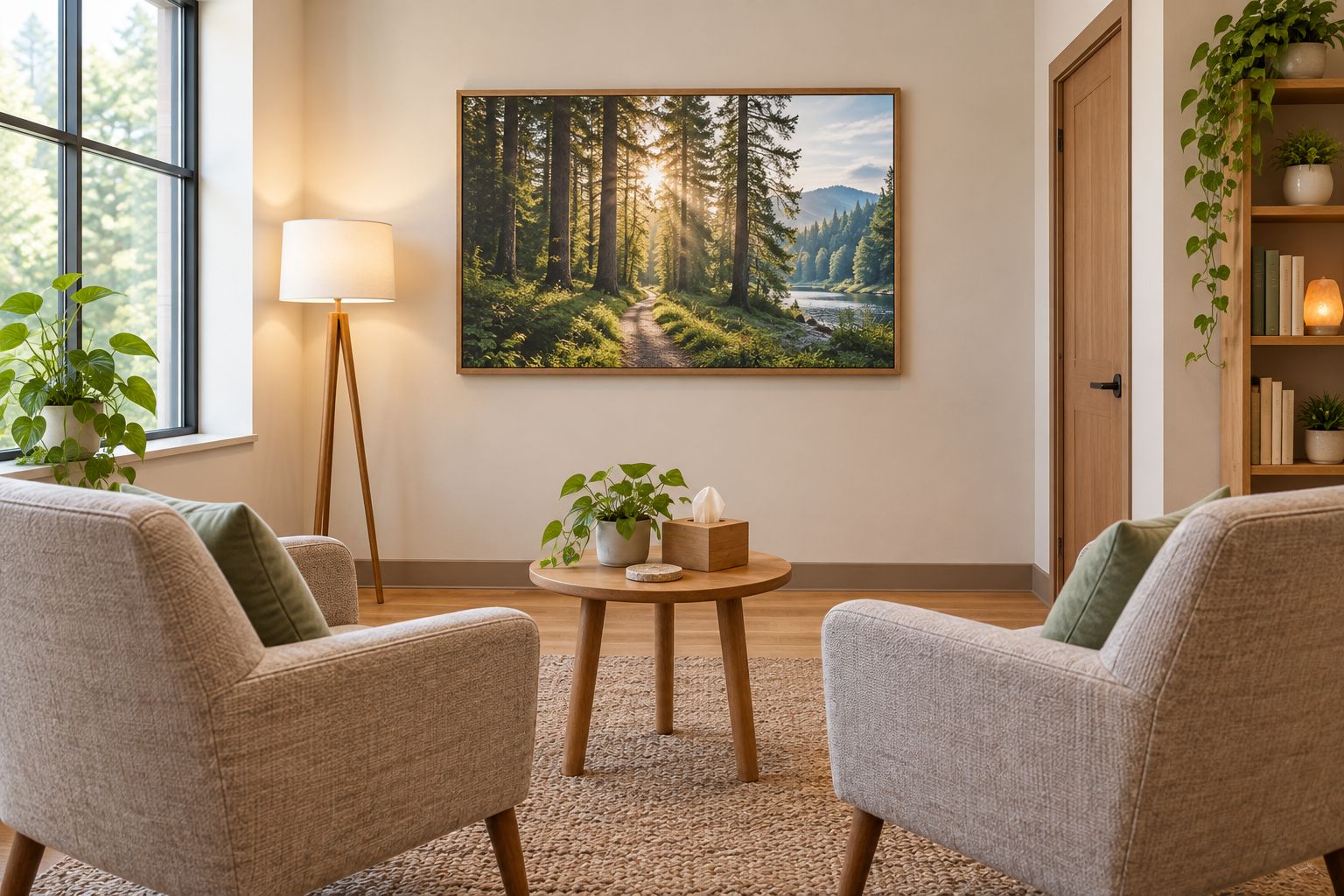
You do not need a professional rendering to make this decision. A phone photograph from each position and a paper outline provide a useful first check.
- Measure the proposed outer frame width and height.
- Photograph the template from each viewing position.
- Check clearance around doors, furniture, switches, and notices.
- Review the camera crop if the room supports remote sessions.
5. Match the composition to the surrounding room
Photograph your wall with the lights on, then compare candidate images beside that photograph. This manual check helps you judge relationships without assuming a retailer’s room mockup matches your space.
Review color and visual detail separately. An image can share your upholstery colors yet introduce much more detail than the rest of the room. Conversely, a restrained composition can become the strongest object on an otherwise empty wall.
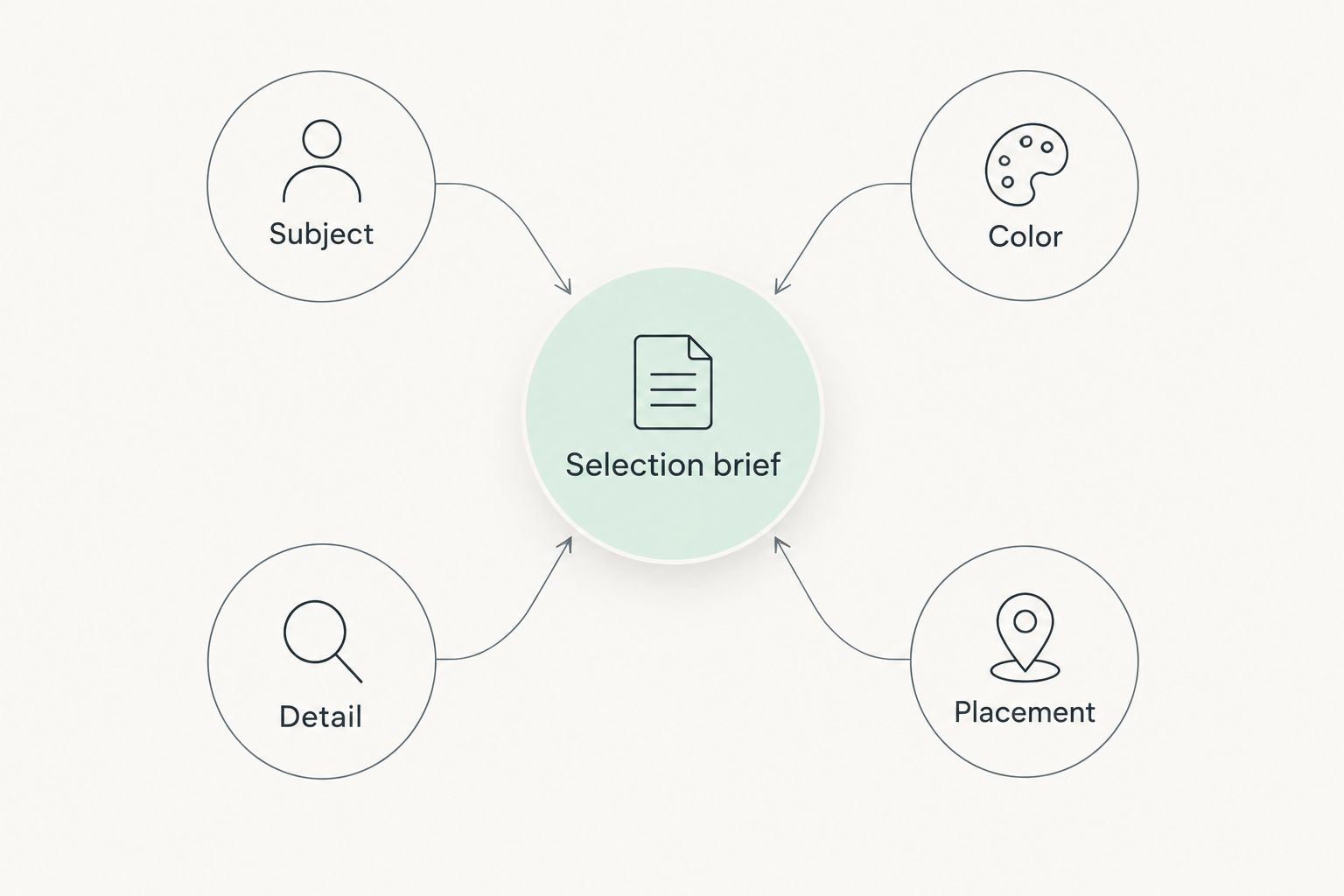
Write a 2026 selection brief using four plain labels: subject, color, detail, and placement. Avoid turning personal taste into clinical language. You are deciding how the room looks, not prescribing an emotional response.
For a shared practice, keep those criteria consistent across rooms while allowing individual images to differ. Consistency does not require repeating the same photograph everywhere.
- Subject: name the landscape or natural feature you want.
- Color: compare the image with walls, upholstery, and flooring.
- Detail: review how much there is to inspect within the scene.
- Placement: identify the wall and its viewing positions.
6. Check lighting, framing, and installation requirements
Test the intended position using an existing framed piece before selecting a finish. Your office’s windows and lamps matter more than the lighting in a product photograph.
Make 2 lighting checks: one with daylight entering the room and one under the artificial lighting used for appointments. These checks are an inspection method, not a product performance claim. Look for reflected windows or lamps from the client chair, and repeat the check after changing the frame angle or position.
Confirm the listed print material, dimensions, framing requirements, and hanging method for the exact item you choose. Do not transfer specifications between similar-looking products. Ask your landlord or facilities contact about installation restrictions where applicable.
Resolve reflection and mounting questions before ordering. A compelling image does not answer either question.
- Inspect reflections from the actual seated positions.
- Confirm the selected item’s material and outer dimensions.
- Check whether framing or mounting requires separate arrangements.
- Follow the hardware instructions for your wall type.
7. Review the installed artwork without assigning it an outcome
Begin with an existing piece or a temporary layout when possible. Once you install new artwork, inspect the room again from the same positions used during planning.
For your 2026 review, record practical issues: reflected light, awkward placement, competing objects, or details that seem more prominent at full size. Address those observations directly. Moving a frame is a placement decision; replacing an image is a subject decision.
If a client comments on the artwork, do not require them to explain or endorse your choice. Keep decor feedback separate from treatment outcomes. A positive comment is not evidence that the artwork improves counseling effectiveness.
Barksdale Fine Art nature wall art is a decor purchase; assess the selected print against your room brief rather than treating it as a clinical tool.
- Recheck the installed piece from the client chair.
- Inspect its relationship to certificates and other wall objects.
- Make optional feedback genuinely optional.
- Change placement or subject when your review identifies a problem.
Compare nature print options for counseling offices
Choose by subject fit first, then verify the exact item’s specifications. These options offer different imagery; none establishes a therapeutic benefit. The limitations below concern selection and room fit, not tested product performance.
| Option | Best for | Main advantage | Key limitation |
|---|---|---|---|
| Mountain Stream Photography | Buyers seeking forest and stream imagery | Combines woodland and water in a nature scene | The combined subject needs review if your brief calls for a simpler composition |
| Columbia River Gorge Art | Buyers seeking a Pacific Northwest waterfall subject | Provides a specific landscape rather than an unspecified nature theme | A waterfall subject is not a substitute for checking room fit |
| Your own landscape photograph | Buyers seeking a personally familiar place | Lets you choose the exact location and composition | You must confirm reproduction rights, image suitability, and print preparation |
| Existing office artwork | Buyers testing placement before replacing decor | Supports a practical layout and reflection check | It does not show how a different print or finish will behave |
For the two catalog options, use these product cards to inspect the exact artwork. Compare the images against your written brief before choosing materials or dimensions.


Common mistakes therapists make when choosing office art
- Calling nature imagery universally calming. Describe the subject instead. Do not promise a client response that the artwork has not established.
- Decorating only from the therapist’s viewpoint. Review the client chair and entrance before deciding that a placement works.
- Using room mockups as size evidence. Measure your actual wall and selected frame; a staged room does not supply those dimensions.
- Turning shared offices into personal travel galleries. Review each place and subject against the practice’s room brief, not only its meaning to you.
- Adding art without reviewing existing visual demands. Consider notices, certificates, shelves, lighting, and the video background together before introducing another focal point.
FAQ
What’s the best nature wall art for a therapist’s office?
The best nature wall art fits the office’s subject brief, seated sightlines, and lighting. Compare forest, water, mountain, and botanical imagery without assuming one category suits every client.
Does nature wall art reduce anxiety during counseling?
Do not treat a nature print as an anxiety treatment or promise a clinical benefit from it. Select artwork as part of the room’s decor, separate from therapeutic interventions.
Is forest photography better than waterfall photography for counseling offices?
Neither subject is universally better for counseling offices. Review the exact composition, visible details, and placement rather than choosing by category alone.
Where should I hang artwork in a therapy room?
Choose placement after checking the view from the client chair, therapist chair, and entrance. Include the video background in your review when you conduct remote appointments.
What size print should I choose for a small counseling office?
Choose the size by testing the proposed outer frame dimensions on your actual wall. Use a paper template and check nearby furniture, doors, and notices before ordering.
Can I use my own nature photographs in my counseling office?
Yes, you can use photographs you have the rights to reproduce. Check image suitability, print preparation, and framing requirements before committing to a full-size piece.
Is Barksdale Fine Art suitable for counseling office decor?
Barksdale Fine Art sells fine art photography and digital art prints for home and office decor buyers. Its nature and landscape subjects are options for counseling offices, but the buyer must assess the exact artwork, specifications, and room fit.
One last thing
Before approving your 2026 layout, look at the wall without the proposed artwork. Then look again with its paper outline in place. If you cannot explain what the piece contributes beyond filling empty space, keep the wall empty while you refine the brief. Buying later is better than making a permanent selection for an undefined purpose.


