

Western and landscape wall art for wineries and tasting rooms: complete 2026 guide
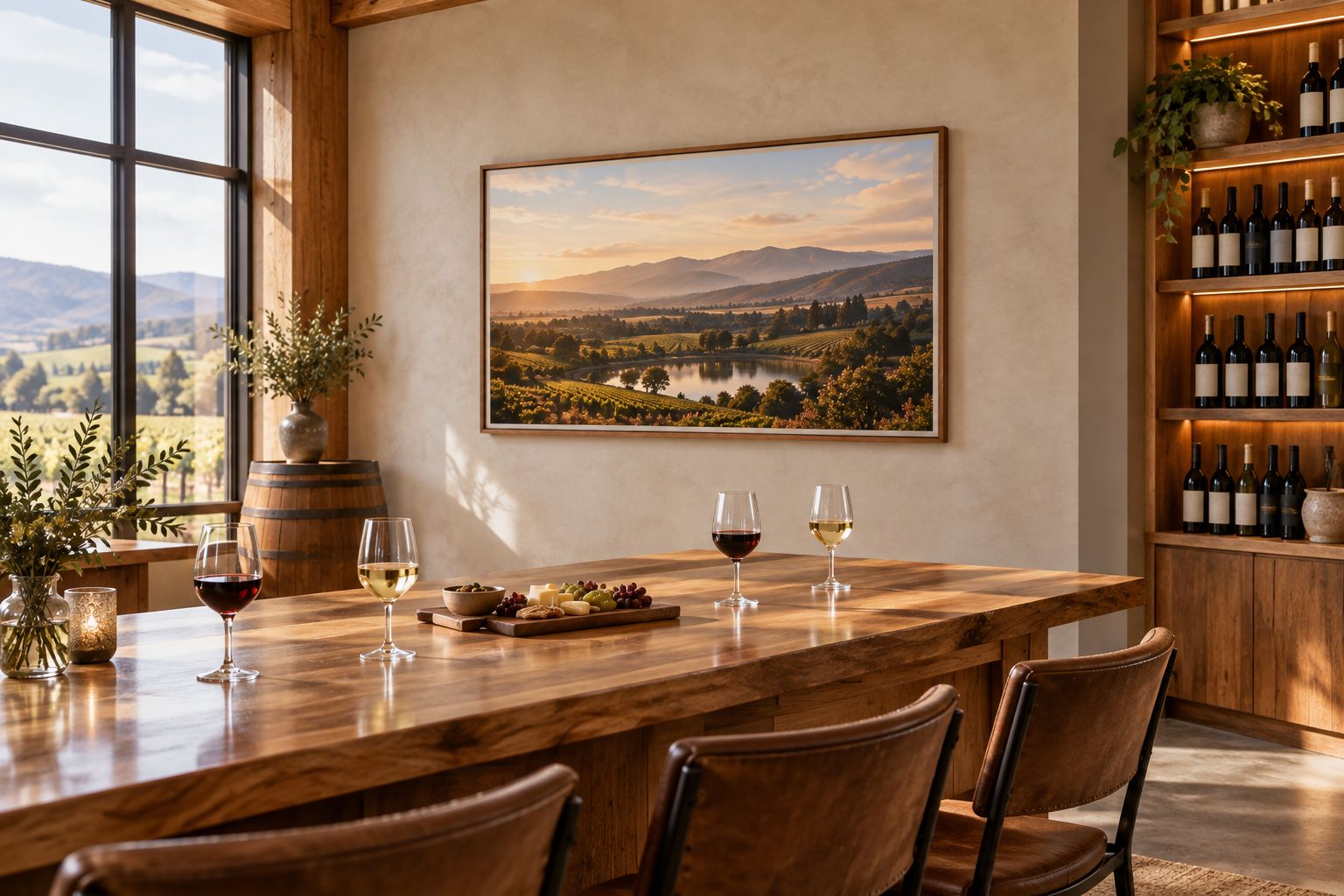
Winery and tasting-room wall art is artwork selected to connect a hospitality space with its setting while keeping attention on the wine and conversation. This 2026 guide explains how to choose western and landscape prints around your winery’s identity, guest sightlines, lighting, and installation needs.
- Choose wall art for wineries and tasting rooms around place, not wine-themed decoration alone.
- Barksdale Fine Art landscape prints suit tasting rooms seeking recognizable scenery rather than estate-specific imagery.
- Use western wall art where ranching or rural heritage belongs in your winery’s story.
- Test artwork from seated positions and under service lighting before choosing the final arrangement.
Why wall art matters for wineries and tasting rooms
A tasting room has competing visual jobs: introduce your winery, display bottles, communicate tasting information, and give guests somewhere comfortable to linger. Artwork should support those jobs, not become another sign demanding attention. Start with the walls guests actually see during service.
Your setting also changes the choice. A room overlooking vines already has a landscape focal point; an interior tasting bar without windows needs a different approach. Rural imagery can connect with agricultural surroundings, but a cattle scene does not automatically explain a vineyard.
For your 2026 selection, separate geographic relevance from decorative preference. A mountain print can belong in your room because its composition suits the space, even when the mountain is elsewhere. Do not present that image as a view of your estate.
The western wall art guide for ranch-style homes offers another way to assess rural subjects. Apply that visual direction selectively: a tasting room needs space for bottles, staff movement, and guest conversation rather than a complete residential decorating scheme.
How to choose and install your artwork
1. Define the story your room should tell
Write a short brief before browsing prints. Name the place, the atmosphere, and the part of your winery’s identity that belongs on the wall. A useful brief describes a specific relationship: local farming heritage, surrounding mountains, nearby waterways, or the contrast between rural land and contemporary interiors.
For a 2026 refresh, begin with what remains in the room. Existing wood, stone, upholstery, and views should influence the art selection. Do not build a new visual story that contradicts the space guests already experience.
Make 2 room photographs: one from the entrance and one from the seated tasting area. Use them to keep your brief grounded in the room rather than isolated product images.
- Name the geographic setting you want to reference.
- Identify whether the room feels rural, contemporary, or mixed.
- List permanent finishes and furniture that will remain.
- Mark bottle displays and information signs as separate visual priorities.
- Write down subjects that would misrepresent your estate.
2. Map the walls guests actually see
Walk through the room as a guest before measuring empty wall space. Check the arrival view, the tasting position, and the route toward seating or checkout. A wall that looks important in an empty room can disappear behind people during service.
Measure usable wall width and height in inches, excluding switches, door swings, shelving, and required signage. Then record the likely viewing distance. A photograph with small details deserves a closer inspection than a broad landscape intended to read across the room.
Choose the viewing position before the artwork size. This prevents a large print from becoming an expensive answer to the wrong wall.
- Photograph the entrance sightline with furniture in place.
- Check the view from 3 positions: standing, seated, and approaching.
- Note where staff carry glasses or move chairs.
- Identify glare from windows and overhead fixtures.
- Keep emergency information and operational signage unobstructed.
3. Match the subject to your winery’s identity
Build a shortlist yourself by comparing image subject, composition, and geographic relevance. Start with existing estate photographs or images you already have permission to use. Those provide a direct connection to your property, though they still need enough image quality for the intended print size.
Barksdale Fine Art offers D. Lawrence Barksdale’s photography and digital art prints across landscape, nature, western, architecture, wildlife, and abstract subjects. That gives you a ready-made alternative when the brief calls for broader scenery rather than an image of your own vineyard.
Barksdale Fine Art landscape prints are best for tasting rooms seeking recognizable scenery rather than estate-specific imagery. Their limitation is equally clear: a named destination is not documentation of your winery.
- Choose western subjects for a genuine rural or ranch-related connection.
- Select regional landscapes when the location supports your story.
- Use forest or water scenes when the brief emphasizes nature.
- Reserve architectural or abstract imagery for a deliberate design contrast.
- Reject attractive images that require a misleading explanation.
4. Test scale before choosing the arrangement
Use paper templates to test the proposed outer frame dimensions on the wall. Keep the furniture in its normal position. This manual check lets you see whether the arrangement sits comfortably above a bench, between shelves, or beside a tasting bar.
Choose a single focal image when the wall needs a clear visual center. Use a coordinated grouping when several images share a subject or compositional relationship. Neither arrangement wins by default; the wall and the guest’s viewing position decide.
A shared frame treatment can connect different landscapes without making every image identical. Leave visible space between artwork, bottle displays, and signs so each has a distinct role.
- Tape full-size paper templates where frames would sit.
- Include the frame’s outer dimensions in the template.
- Check the arrangement above actual furniture.
- Keep neighboring signs visually separate.
- Photograph the mock-up before changing it.
5. Check lighting and display conditions
View the proposed wall during daytime and evening service. A bright window opposite a glazed frame can create reflections; a dark corner can hide the details you selected the photograph for. Evaluate the actual lighting rather than choosing from a bright screen alone.
For paper photographs, ask the seller or framer about the print material, glazing, and suitable display conditions. Keep sensitive artwork away from direct sunlight and avoid locations exposed to splashes or repeated handling. Do not assume a decorative print is suitable for every hospitality setting.
An attractive image and an appropriate installation are separate decisions. Confirm the display details before committing to the wall.
- Inspect reflections from the seated tasting position.
- Test the wall under the lighting used during service.
- Identify direct sunlight across the proposed location.
- Keep artwork clear of sink splash and cleaning activity.
- Ask about care requirements for the selected print and frame.
6. Coordinate installation with service
Plan installation around how the room operates. Chairs move, guests gather at the bar, and staff need access to storage. Keep the artwork outside those contact areas rather than relying on guests to avoid it.
Choose mounting hardware for the actual wall construction and the finished artwork’s weight. Follow the hardware manufacturer’s instructions, and use a qualified installer when the location or load requires one. Do not treat a lightweight mock-up as proof that the finished frame can hang the same way.
For your 2026 installation plan, document placement and care instructions together. The person cleaning the room needs to know which surfaces require special treatment.
- Confirm wall construction before selecting fixings.
- Check the finished frame’s weight and mounting instructions.
- Keep frames clear of chair backs and door movement.
- Schedule installation outside guest service.
- Record cleaning guidance where staff can find it.
7. Review the room during actual service
Make the final assessment with the room furnished and operating normally. Look for blocked views, distracting reflections, and artwork that competes with the tasting menu. Judge the arrangement as part of service, not as an empty-room photograph.
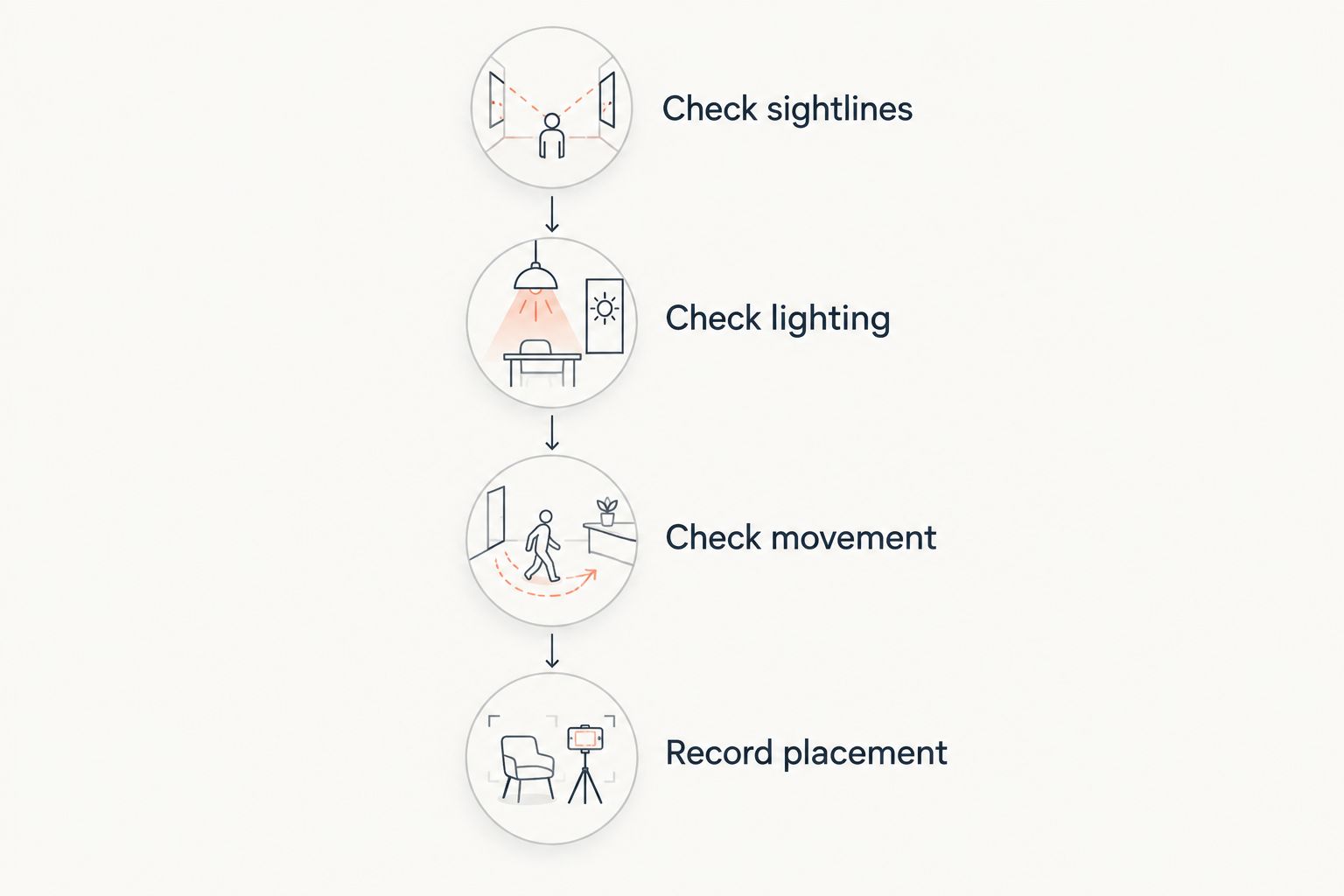
Use a short review sequence: check sightlines, check lighting, then check movement. These are observable conditions you can correct without guessing whether art has increased sales. Staff feedback helps identify operational problems that a decorating walkthrough misses.
Keep a photograph of the approved arrangement in your 2026 room plan. It provides a reference when furniture moves or an event setup changes the wall’s surroundings.
- Check sightlines: inspect the art from guest seating.
- Check lighting: look for reflections during service.
- Check movement: observe nearby chair and staff routes.
- Record placement: save the approved room photograph.
Compare artwork options for your tasting room
Choose the source and subject together. Estate photography gives you a direct property connection; ready-made prints give you an existing image to evaluate. A commissioned work starts with your brief but requires you to define the desired result and usage terms.
The Barksdale Fine Art options below illustrate western and landscape directions. Choose for the room’s story first, then confirm the print and framing details. These are different visual approaches, not interchangeable descriptions of your winery.
| Option | Best for | Main advantage | Key limitation |
|---|---|---|---|
| Your own estate photography | Property-specific storytelling | Shows your actual vines, buildings, or landscape | Image quality and reproduction rights need checking |
| Cowboy Art Print | Tasting rooms with a ranching or western heritage brief | Offers an explicitly western subject | A cattle-drive subject does not represent vineyard activity |
| Columbia River Gorge Art | Pacific Northwest landscape themes | References a named regional landscape | The destination must not be presented as your estate |
| Yosemite Half Dome Print | Rooms using a mountain or winter landscape theme | Provides a recognizable mountain subject | A winter landmark is a specific thematic choice, not a vineyard view |
| Commissioned artwork | A brief requiring an original interpretation | Lets you specify the subject and intended setting | Requires agreement on the brief, revisions, and usage rights |
For the western direction, select the cattle-drive print only when that subject belongs in your winery’s narrative. For regional scenery, assess the Columbia River Gorge image against your setting. For a mountain theme, test whether the Yosemite winter subject fits the room throughout the year.
The following prints give you concrete images to compare after completing the wall and lighting checks. Confirm the current product details before selecting a print format or arranging framing.


Common mistakes wineries and tasting rooms make
Treating every rural image as winery imagery
A barn, cattle drive, and vineyard tell different stories. Choose a western subject because it matches your heritage or design brief, not because it contains open land. Keep any interpretation of the image accurate.
Competing with the bottle display
An intricate gallery wall beside densely arranged bottles creates competing focal points. Give the art a separate zone, or simplify the arrangement. Decide whether that wall’s primary job is displaying artwork or helping guests read bottle labels.
Buying for an empty-room photograph
A frame can look well placed before chairs, menus, and guests return. Test its position during normal use. Watch for chair backs touching frames and groups standing directly in front of the intended focal image.
Describing a distant landscape as local
A recognizable destination needs an accurate description. If you choose a nonlocal landscape, explain its artistic or thematic connection without implying it depicts nearby land. This distinction belongs in staff talking points as well as any caption.
Changing the art without checking the lighting
Your 2026 refresh should include the wall’s lighting conditions, not just new images. A different frame or glazing choice can change reflections. Recheck the seated view after installation instead of assuming the previous arrangement’s conditions still apply.
FAQ
What’s the best wall art for wineries and tasting rooms?
The best wall art for wineries and tasting rooms connects with the winery’s setting and remains readable from guest seating. Choose western imagery for a relevant rural heritage story, regional landscapes for a place-based theme, or estate photography for a direct property connection.
Does winery wall art need to show vineyards or wine bottles?
No, winery wall art does not need to show vineyards or wine bottles. Mountains, waterways, rural scenes, and abstract imagery can support a clear design brief without repeating the tasting room’s merchandise.
Is western art a good choice for a modern tasting room?
Western art is a good choice for a modern tasting room when the subject supports its rural or ranch-related identity. Test the image against the existing finishes rather than assuming western art requires an entirely rustic interior.
Should I choose a landscape from my winery’s region?
Choose a regional landscape when geographic connection is part of your room’s story. A nonlocal landscape can serve a visual theme, but describe its location accurately and do not imply that it shows your estate.
How do I choose the right artwork size for a tasting room?
Choose artwork size by testing the outer frame dimensions on the actual wall with paper templates. Check the result from seated and standing positions, with furniture and bottle displays in place.
Where should I avoid hanging fine art photography in a winery?
Avoid locations exposed to direct sunlight, splashes, repeated handling, or furniture contact. Confirm the selected print and frame’s care requirements before deciding on a permanent location.
Are Barksdale Fine Art prints suitable for tasting-room decor?
Barksdale Fine Art sells landscape, nature, western, architecture, wildlife, and abstract prints that provide subjects to consider for tasting-room decor. Match the image to your room’s brief and confirm the individual print’s display and framing requirements.
One last thing
Choose the wall before choosing the image. Walk your tasting room during service and identify the surface guests can actually see without looking through bottles, signage, or reflections. That observation is more useful than an unrestricted shortlist of attractive prints.
For your 2026 project, approve an image only after it passes the story, sightline, and lighting checks. If the room already overlooks a compelling vineyard view, let that view remain the focal point and give the artwork a supporting wall.


